
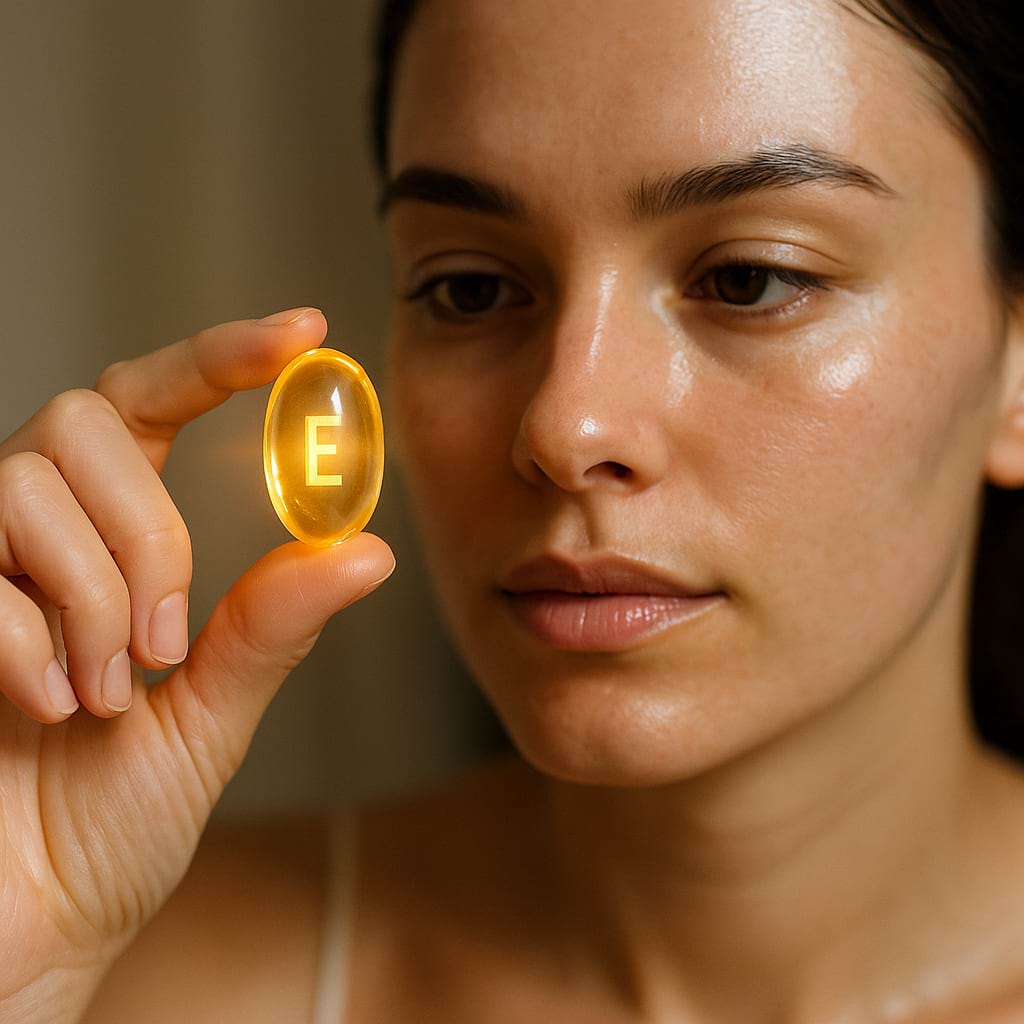
When it comes to skincare, Vitamin E has been a buzzword for decades — often hailed as a miracle ingredient that promises youthful, glowing skin. Not just for the skin, Vitamin E Benefits are important for our entire body. But what does Vitamin E really do, and is it as effective as many claim?
Vitamin E Benefits :
Before knowing the Vitamin E Benefits, let’s know what Vitamin E is?
Vitamin E is a fat-soluble antioxidant. Nuts, seeds, leafy greens, and vegetable oils are foods high in Vitamin E. Almond, Sunflower Oil, Sunflower Seeds, Tomato, Avocado, Broccoli, Kiwi also the best source of vitamin e.
Vitamin E Benefits for Skin : In the world of skincare, it’s most commonly found in serums, creams, and oils. Its primary role? To protect the skin from damage caused by free radicals — unstable molecules produced by sun exposure, pollution, and even the body’s natural metabolic processes.
Benefits of Vitamin E for Eyes : Vitamin E helps maintain good eye health. Vitamin E potentially reduces the risk of age-related macular degeneration.Vitamin E has a protective effect on the cells in our eyes.
Vitamin E Benefits for Women : Vitamin E acts as a potent antioxidant that helps protect the body from oxidative stress and free radicals.Vitamin E can help increase fertility, form red blood cells, and improve kidney function.
What the Research Says
Scientific studies support many of the claims surrounding Vitamin E, but with some caveats. For example:
- Antioxidant Powerhouse: Vitamin E helping to prevent signs of premature aging. It doesn’t reverse wrinkles, but it may help slow their formation.
- Skin Barrier Supporter: Vitamin E can help strengthen the skin’s natural barrier, locking in moisture and keeping irritants out. Especially beneficial for people with dry or sensitive skin.
- Healing and Inflammation: Some studies show that Vitamin E may reduce inflammation and assist in wound healing, though results are mixed. It seems to work better when paired with other antioxidants like Vitamin C. Benefits of vitamin A and E also have many when they work together.
Common Misconceptions
One major myth is that Vitamin E can completely fade scars. It may help reduce redness or support the healing process, but it’s not a guaranteed scar eraser. In some people, especially those who have sensitive skin, Vitamin E can actually cause irritation or allergic reactions.
Also, taking Vitamin E orally in high doses isn’t a shortcut to flawless skin. Overuse of supplements can be harmful, potentially leading to issues like blood thinning or an increased risk of stroke in some individuals.
Best Ways to Use It
If you’re looking to incorporate Vitamin E into your routine, then these tips for you:
- Go Topical First: Choose creams or oils that contain natural sources of Vitamin E (often listed as “tocopherol”). Because it is always better to use vitamin e oil as moisturizer.
- Pair It with Vitamin C: The two work synergistically, boosting each other’s antioxidant effects.
- Patch Test: Always test a new product on a small area of skin to avoid sensitivity.
Vitamin E Benefits aren’t magic, but it’s far from snake oil. When you use it correctly and consistently, it can support healthy skin and enhance your overall skincare routine. As always, balance and moderation are key — and what works for one person might not work for another.