
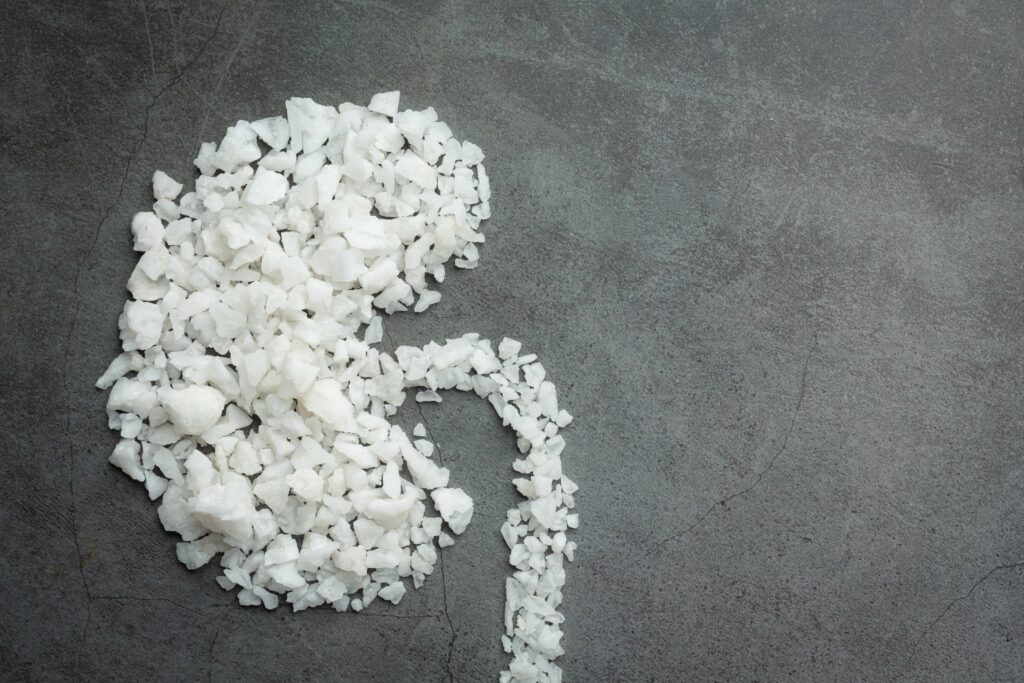
Exploring the Causes and Treatments of Kidney Stones
Kidney stones are indeed small, hard mineral deposits that form inside the kidneys, and they can cause a great deal of pain and discomfort. If a stone becomes dislodged and travels down the ureter, which is the tube that connects the kidney to the bladder, it is called a ureteric or ureteral stone. Ureteric stones can cause a lot of pain as they move through the narrow ureter, and they can also cause complications such as infection or obstruction of the urinary tract. Treatment for kidney and ureteric stones can vary depending on the size and location of the stone, but options may include medication, shock wave therapy, or surgery.
Kidney stones can form due to a combination of various risk factors, which can be classified as either modifiable or non-modifiable.
Non-modifiable risk factors are those that cannot be changed or controlled by an individual. These include:
- Genetic factors and Family history: If someone in your family has had kidney stones, you may be more likely to develop them as well.
- Medical conditions: Certain medical conditions, such as gout, inflammatory bowel disease, and chronic kidney disease, can increase the risk of kidney stone formation.
Modifiable risk factors are those that can be controlled or changed through lifestyle modifications or medical intervention. These include:
- Urinary factors:
- Low urine volume: This can be caused by dehydration or not drinking enough fluids, which leads to concentrated urine and an increased risk of kidney stone formation.
- High urine calcium: This can be caused by hyperparathyroidism (overactive parathyroid glands), sarcoidosis (a disease that causes inflammation in the body), or excess vitamin D intake.
- High urine uric acid: This can be caused by a diet high in purines (found in meat and seafood), gout (a type of arthritis), or certain genetic conditions that cause overproduction of uric acid.
- High urine oxalate: This can be caused by a diet high in oxalate (found in spinach, rhubarb, nuts, and chocolate), or certain medical conditions that cause increased oxalate production or absorption.
- Low urine citrate: This can be caused by certain medications, such as diuretics or aspirin, or medical conditions that cause citrate loss, such as renal tubular acidosis.
- Urinary stasis: This refers to urine that is not flowing freely through the urinary tract, which can be caused by structural abnormalities, such as kidney stones or urinary tract infections.
- As for urine pH, a high pH (alkaline urine) can promote the formation of calcium phosphate stones, while a low pH (acidic urine) can promote the formation of uric acid stones.
- Diet: Consuming a diet high in salt, sugar, and animal protein, as well as low in water and fiber, can increase the risk of kidney stone formation.
- Dehydration: Not drinking enough water can lead to concentrated urine, which can increase the risk of kidney stone formation.
- Obesity: Being overweight or obese can increase the risk of kidney stone formation due to changes in metabolism and hormone levels.
- Medications: Certain medications, such as diuretics and calcium-based antacids, can increase the risk of kidney stone formation.
- Lifestyle factors: Sedentary lifestyle, smoking, and excessive alcohol consumption can also increase the risk of kidney stone formation.
Managing modifiable risk factors, such as maintaining a healthy diet and staying well hydrated, can help reduce the risk of kidney stone formation. It is also important to seek medical attention if you have symptoms of kidney stones or a family history of kidney stones.
Complications of Kidney stones:
Kidney stones can cause blockage of the urinary tract, which can result in severe pain and discomfort. If left untreated, the blockage can lead to a buildup of pressure in the affected kidney, which can ultimately cause damage to the kidney tissue and lead to kidney failure.
The severity of symptoms and the likelihood of kidney damage can depend on the size and location of the kidney stone. Smaller stones may pass through the urinary tract on their own, but larger stones may require medical intervention, such as shockwave lithotripsy or surgical removal.
It’s important to seek medical attention if you suspect you have a kidney stone, especially if you are experiencing severe pain or difficulty urinating. Your healthcare provider can help determine the best course of treatment to relieve your symptoms and prevent complications.
It is possible for kidney stones to cause an infection in the urinary tract, which can then spread to the bloodstream and potentially cause sepsis. This is because kidney stones can obstruct the flow of urine, which can create a buildup of bacteria in the urinary tract, leading to infection.
If left untreated, the infection can spread to the bloodstream and cause sepsis, which is a potentially life-threatening condition. Symptoms of sepsis may include fever, rapid heart rate, low blood pressure, confusion, and difficulty breathing.
What to look out for?
- Pain in the back or the sides of the body
- Blood in urine
- Nausea and vomiting
- Fever and chills
- Frequent urination or severe urge to urinate immediately
- Pain when urinating
How can it be treated?
Most kidney stones are small enough to be passed out in urine and can be treated at home. However, the size of kidney stones that can pass on their own varies from person to person, depending on factors such as the size of the urinary tract, the location of the stone, and the level of pain tolerance.
For small kidney stones, home treatments such as drinking plenty of water, taking over-the-counter pain relievers, and using heating pads or warm compresses can help relieve symptoms and facilitate the passing of the stone. However, it is important to note that some kidney stones may require medical intervention, such as if they are too large to pass on their own, causing severe pain or complications, or if there is an infection present.
Surgical treatment for kidney stones
The main types of surgery for removing kidney stones are:
- Shockwave lithotripsy (SWL)
- SWL (shock wave lithotripsy) is a non-invasive medical procedure used to break down kidney stones using ultrasound (high-frequency sound waves) that are focused onto the stone. The sound waves create shock waves that pass through the skin and tissues of the body and are targeted to the specific location of the kidney stone. The shock waves cause the stone to break into small pieces that can be easily passed out of the body through the urine.
- Ureteroscopy
- Ureteroscope is passed through the urethra, the tube that carries urine out of the bladder, and then into the ureter, which is the tube that carries urine from the kidney to the bladder. Ureteroscopy is a medical procedure used to diagnose and treat problems in the ureter and kidney, such as kidney stones or tumors. During the procedure, a flexible or rigid ureteroscope is inserted into the urethra and then advanced through the bladder and up into the ureter to visualize the area and perform interventions as needed.
- Percutaneous nephrolithotomy (PCNL)
- In this procedure, ureteroscope is passed through the urethra, which is the tube that carries urine out of the bladder, and then into the ureter. Ureteroscopy is a medical procedure used to diagnose and treat problems in the ureter and kidney, such as kidney stones or tumors. During the procedure, a flexible or rigid ureteroscope is inserted into the urethra and then advanced through the bladder and up into the ureter to visualize the area and perform interventions as needed.