
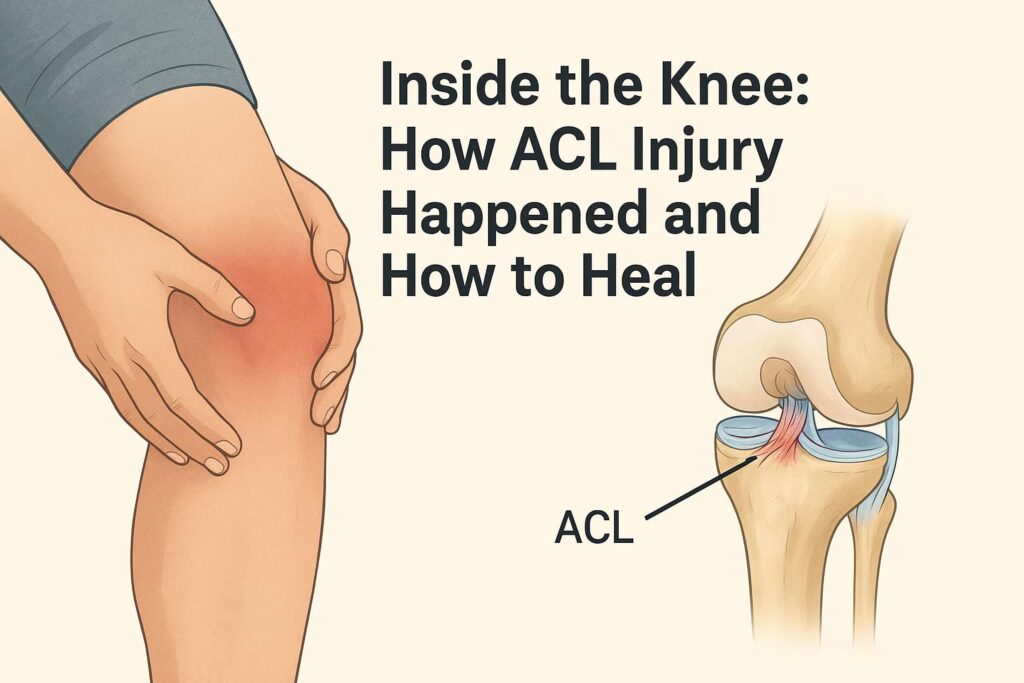
If you have ever watched a soccer game, basketball match or even a recreational sports event, you might have heard about the dreaded ACL injury. It is one of the most common knee injuries. It can be serious enough to sideline athletes and active people for months.
But what exactly an ACL injury is? How does it happen? And what can you do if it happens to you? Let’s break it down in simple terms.
What Is the ACL?
The Anterior Cruciate Ligament (ACL) is one of the key ligaments inside your knee joint. Ligaments are strong bands of tissue that connect bones to each other and help stabilize joints.
The ACL connects the thigh bone (femur) to the shin bone (tibia). It helps control the back-and-forth motion of your knee, keeping it stable when you twist or turn.
How Does an ACL Injury Happen?
An ACL injury usually occurs when the knee is suddenly twisted, hyperextended or bent awkwardly. Some common ways this can happen including:
- Suddenly stopping or changing direction while running
- Landing awkwardly from a jump
- Direct impact to the knee, such as during a tackle or collision
- Pivoting or twisting movements, especially in sports like soccer, basketball, football, skiing or volleyball
While it’s a frequent injury in athletes, anyone can experience an ACL tear, especially during activities involving quick movements or falls.
ACL Injury Symptoms:
If you’ve injured your ACL, you might notice:
- A loud “pop” or popping sensation in your knee
- Sudden pain and swelling (often within a few hours)
- A feeling of instability or your knee “giving way” when you try to stand or walk
- Loss of full range of motion
- Difficulty putting weight on the affected leg
Swelling usually develops quickly, making it important to seek care as soon as possible.
How Is an ACL Injury Diagnosed?
A healthcare provider will start by asking how the injury happened and perform a physical exam to check for knee stability and range of motion.
They might also order imaging tests such as:
- MRI (Magnetic Resonance Imaging): To see detailed images of soft tissues like ligaments and cartilage
- X-rays: To rule out bone fractures
These tests help confirm the diagnosis and check if other parts of the knee are injured.
Treatment Options
Treatment depends on several factors like age, activity level and the severity of the injury. It can be broken down as Surgical and Non-Surgical Treatment
Surgical Treatment
For many athletes or those with a complete tear, surgery to reconstruct the ACL is often recommended. This involves replacing the torn ligament with a graft taken from another tendon in your body or from a donor.
Post-surgery, physical therapy is essential to regain strength, flexibility and function.
Non-Surgical Treatment
If the tear is partial or if you are less active, your doctor might recommend physical therapy and exercises to strengthen the muscles around the knee and improve stability. Bracing and avoiding activities that stress the knee are often part of this approach.
Recovery and Rehabilitation
Recovery can take from 6 months to a year, depending on the treatment and individual factors. Physical therapy is a key part of rehab, helping you safely return to your daily activities and sports. Rehabilitation for ACL injury is crucial for both nonsurgical and surgical cases.
How to prevent ACL injury?
While not all injuries can be avoided, some steps can help lower your risk:
- Strengthening leg muscles, especially the hamstrings and quadriceps
- Practicing proper techniques during sports
- Improving balance and agility through training exercises
- Wearing proper footwear
- Warming up before physical activity
An ACL injury can be painful and disruptive, but with the right care and rehabilitation, most people return to their normal activities and even sports successfully. If you experience knee pain after a twist or fall, don’t ignore it. Early diagnosis and treatment are key to preventing further damage.
Taking care of your knees today means better movement and less pain tomorrow