
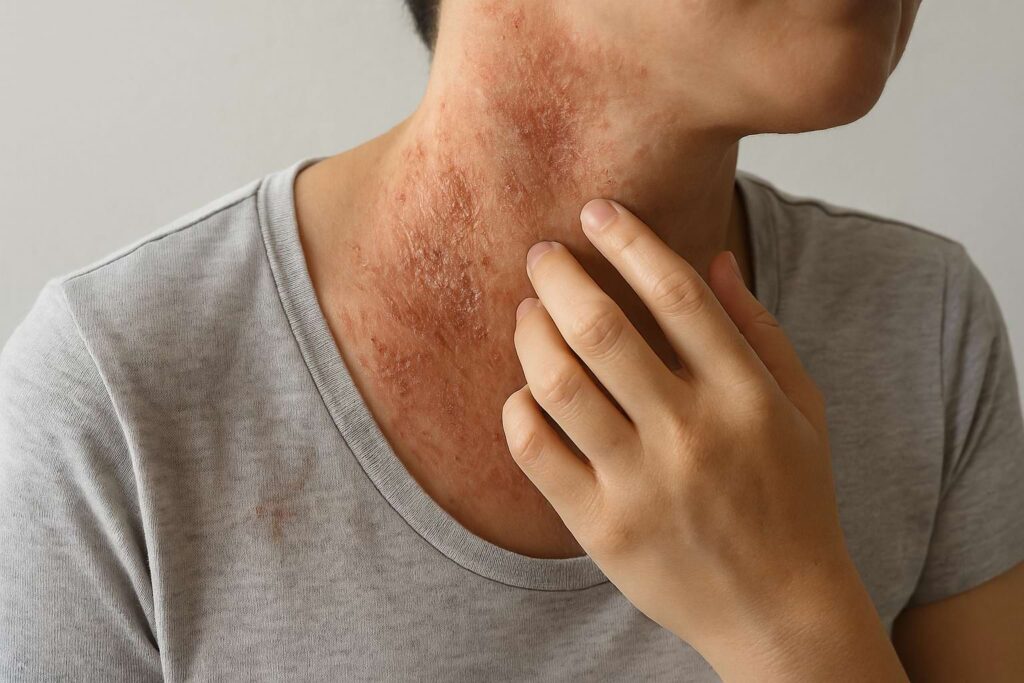
If you have ever dealt with dry, itchy and irritated skin that just won’t go away, you might have experienced a condition called Atopic dermatitis. It is also known as eczema. It’s more common than you might think, especially in children but it can affect people of all ages.
Let’s break down what atopic dermatitis really is what causes it and how you can manage it.
What is Atopic dermatitis?
It is a chronic skin condition that causes inflammation, itching and dry patches. It’s part of a group of conditions known as the “atopic triad,” which also includes asthma and hay fever. People who have atopic dermatitis also have one or both of those conditions—or have family members who do.
This skin condition can be triggered by different things like weather, stress or allergens.
Atopic dermatitis symptoms?
Atopic dermatitis can look a little different depending on your age, skin tone and how severe it is. Common symptoms include:
- Dry, scaly skin
- Red or brownish-gray patches
- Intense itching, especially at night
- Cracked or thickened skin
- Oozing or crusting in more severe cases
In children, it appears on the face, scalp and the insides of elbows or knees. In adults, it can show almost anywhere but commonly affects the hands, neck and eyelids.
What Causes It?
There’s no single cause for atopic dermatitis. It is usually linked to a mix of genetics, immune system sensitivity and environmental triggers. Basically, your skin’s protective barrier doesn’t work as well as it should, making it more prone to irritation and infection.
Some common triggers include:
- Soaps and detergents
- Certain fabrics (like wool)
- Dust mites or pollen
- Hot or cold weather
- Stress
- Certain foods (in some children)
Is It Contagious?
Nope! it isn’t contagious. So you can’t catch it from or give it to someone else. But it said that scratching affected areas can lead to open wounds and infections, so it’s important to manage it properly.
How Is It Treated?
There’s no cure for atopic dermatitis, but there are many ways to manage and reduce flare-ups:
- Moisturize, Moisturize, Moisturize
- Use unscented creams or ointments (not lotions) regularly—especially after bathing.
- Avoid Triggers
- Try to figure out what causes your flare-ups and avoid them as much as possible.
- Medications
- Doctors may recommend steroid creams, antihistamines for itching or other prescription treatments in more serious cases.
- Bathing Tips
- Short, lukewarm baths or showers are best. Pat your skin dry and apply moisturizer right away.
- See a Dermatologist
- If over-the-counter treatments aren’t helping, it’s time to talk to a specialist. There are newer therapies and medications that can really help.
Living with atopic dermatitis
Managing atopic dermatitis can be frustrating, especially when flare-ups seem to come out of nowhere. But with the right care and habits, we are able to keep atopic dermatitis symptoms under control and live comfortably.
If you or your child has dry, itchy skin that just won’t go away, don’t ignore it. Visit your doctor or dermatologist to help you figure out a plan that works for you.