
When most people think of vitamin C, they imagine a glass of orange juice or reach for a supplement the moment they feel a sniffle coming on. The benefits of vitamin C are indescribable. While it’s true that vitamin C plays a key role in supporting the immune system, there’s a lot more to this powerhouse nutrient than meets the eye.
In fact, vitamin C is involved in many vital functions in the body—some of which might surprise you.
What Exactly Is Vitamin C?
Vitamin C is also known as ascorbic acid. It is a water-soluble vitamin that your body can’t produce on its own. That means you have to get it regularly from your diet or supplements.
It’s best known for helping your immune system function properly—but its benefits go far beyond that.
The Unsung Benefits of Vitamin C
Here are a few Benefits of vitamin C does for your body:
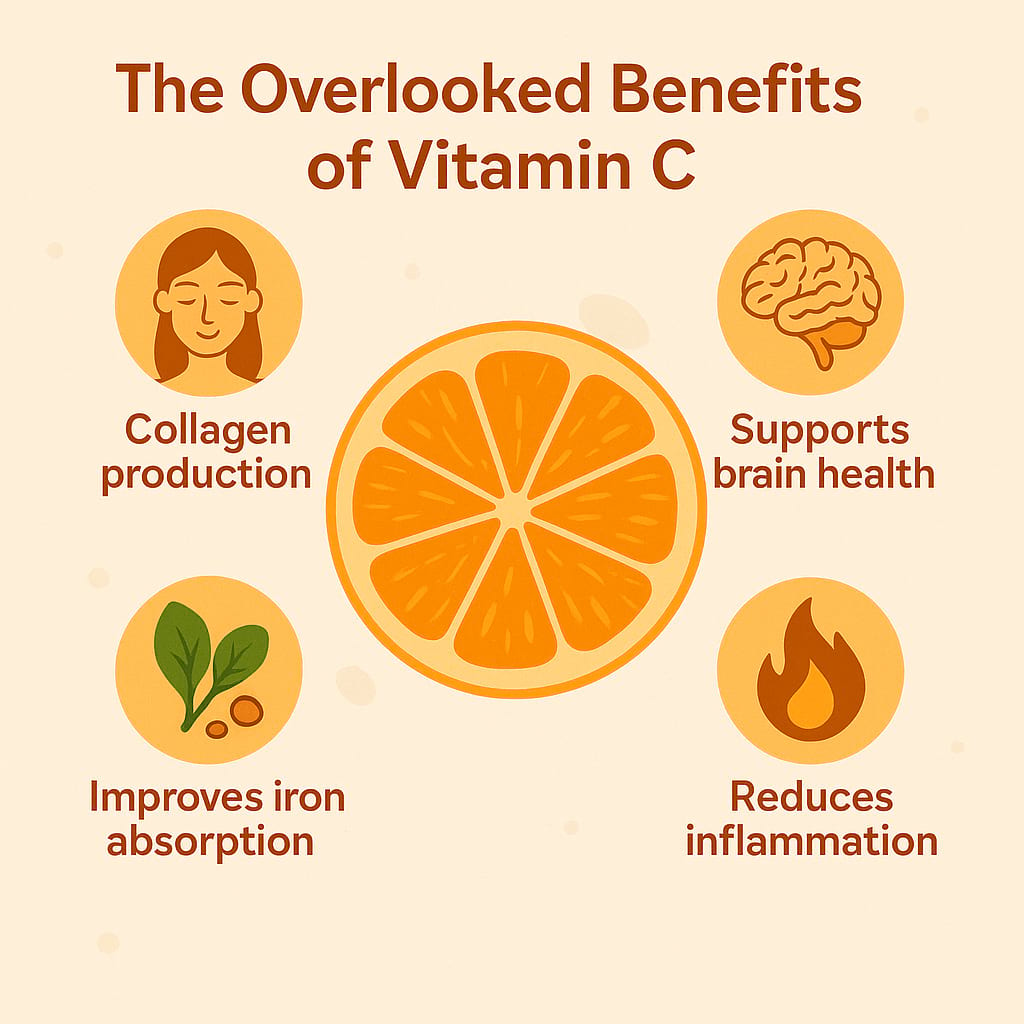
- Collagen production vitamin c
Collagen is the protein that keeps your skin firm, your joints flexible and make your connective tissues strong. Without vitamin C, your body can’t produce it properly. That means this skin health vitamin c directly supports wound healing and even healthy aging.
- Improves Iron Absorption
If you have ever been told you’re low in iron, especially if you follow a plant-based diet, vitamin C can help. It enhances the body’s ability to absorb non-heme iron (the kind found in plant foods like spinach and lentils). Pairing iron-rich foods with vitamin C sources can make a big difference.
- Fights Free Radicals
Vitamin C is a powerful antioxidant. It helps neutralize harmful molecules called free radicals. These unstable molecules can damage cells over time and contribute to aging or disease. Antioxidants like vitamin C help protect the body from this damage and support long-term health.
- Supports Brain Health
Emerging research has found links between vitamin C and cognitive function. It appears to play a role in neurotransmitter production and may help protect against oxidative stress in the brain. While it is not a cure-all, it’s one more reason to make sure you’re getting enough.
- Reduces Inflammation
Chronic inflammation has been linked to a wide range of health issues, from heart disease to arthritis. Vitamin C has anti-inflammatory properties that help calm overactive immune responses and reduce the body’s stress load over time.
Vitamin C rich foods
It is easy to find in many fruits and vegetables. Here are some of high vitamin c foods natural sources:
- Citrus fruits (oranges, grapefruits, lemons)
- Strawberries
- Kiwi
- Bell peppers
- Broccoli
- Brussels sprouts
- Papaya
- Pineapple
Eating a variety of these foods regularly should keep your levels in a healthy range—no supplements needed, in most cases.
Should You Take a Supplement?
For most people with a balanced diet, vitamin C supplements aren’t necessary. But there are exceptions:
- If you smoke or are exposed to secondhand smoke
- If your diet lacks fresh fruits and vegetables
- If you’re recovering from surgery, infection, or chronic illness
- If you’re under prolonged physical stress (like intense training)
In those cases, check with a healthcare provider first when starting to take supplements. More isn’t always better. Even Mega doses can cause side effects like stomach upset or kidney stones.
Vitamin C has earned its reputation as an immune booster but that’s only part of the story. From collagen production to antioxidant protection, iron absorption and even brain function—benefits of vitamin c does a lot of heavy lifting.
The best part? It’s easy to get through food if you keep your meals colorful, fresh and full of variety. Highest vitamin c vegetable like spinach and lentils.
So next time you slice up a bell pepper or eat a handful of strawberries, remember: you’re not just fighting off a cold—you’re fueling your whole body, inside and out.