
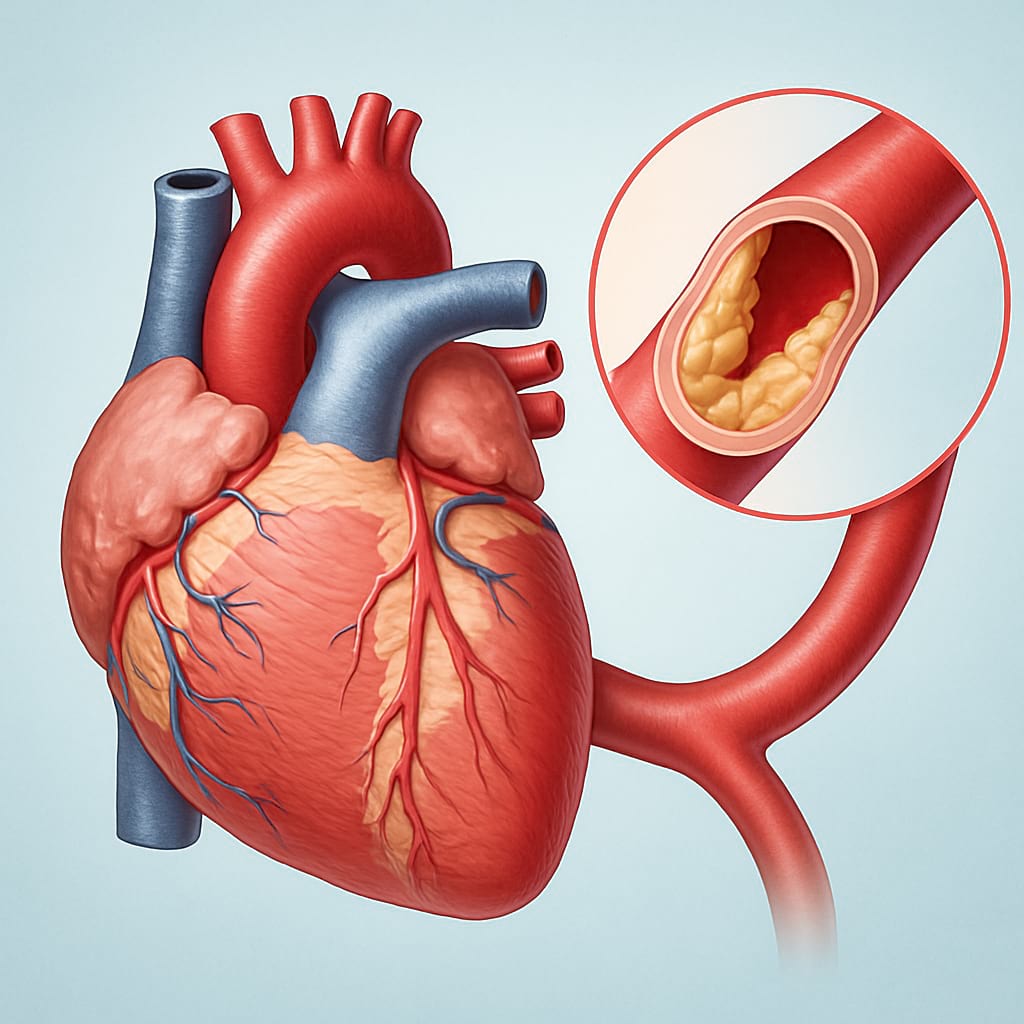
What Is Atherosclerosis?
Atherosclerosis is a condition where the arteries—the blood vessels that carry oxygen-rich blood from your heart to the rest of your body—become narrowed and hardened due to a buildup of plaque. Your arteries like smooth, flexible pipes. Over time, plaque (a mix of cholesterol, fat, calcium and other substances) can build up on the inner walls. This buildup can slow down or block blood flow.
In simple terms: it is like a clogged pipe in your plumbing system, except it’s happening inside your body. It can lead to serious health issues.
What Atherosclerosis Causes?
Atherosclerosis doesn’t happen overnight. Sometimes it often begins in childhood and slowly worsens as you age. The exact cause isn’t always clear but certain factors increase your risk:
- High cholesterol – Especially LDL (the “bad” cholesterol)
- High blood pressure – Damages artery walls and speeds up plaque formation
- Smoking – One of the worst habits for your blood vessels
- Diabetes – Affects how your body handles fat and sugar
- Unhealthy diet – High in saturated fat, trans fat, and sugar
- Lack of exercise – Being inactive can worsen many risk factors
- Family history – Genetics can play a role, especially if heart disease runs in your family
Signs of Atherosclerosis
The tricky part about atherosclerosis is that it usually doesn’t cause symptoms until an artery becomes significantly narrowed or blocked. When symptoms do appear, they depend on which arteries are affected:
- In the heart: Chest pain or pressure (angina), especially during activity
- In the brain: Numbness, weakness, or difficulty speaking—possible signs of a stroke
- In the legs: Pain when walking (called claudication)
- In the kidneys: High blood pressure or kidney failure
In some cases, the first sign may be a heart attack or stroke. So prevention and early detection are so important.
How Is It Diagnosed?
Doctors use several tools to diagnose atherosclerosis:
- Blood tests to check cholesterol and sugar levels
- Imaging tests like ultrasounds, CT scans or angiograms to look at blood flow
- Electrocardiograms (ECG/EKG) or stress tests to monitor how your heart functions under pressure
Regular checkups are important, especially if you have risk factors or a family history of heart disease.
Atherosclerosis Treatment and Prevention
There’s no “cure” for atherosclerosis. But it can be managed and even slowed down with lifestyle changes, medication or procedures.
Lifestyle Changes:
- Eat a heart-healthy diet which rich in fruits, vegetables, whole grains and healthy fats
- Exercise regularly (at least 30 minutes a day)
- Quit smoking
- Manage stress
- Control conditions like diabetes, high blood pressure and high cholesterol
Medications:
Doctors may prescribe:
- Statins to lower cholesterol
- Blood pressure medications
- Aspirin to reduce the risk of clots (in some cases)
Procedures:
In more advanced cases, atherosclerosis treatment like angioplasty (to open a blocked artery) or bypass surgery may be needed.
It is common and serious but it’s not something you’re powerless against. By staying informed, making healthy choices and working closely with your doctor, you can reduce your risk and protect your heart, brain and other vital organs.
If you have atherosclerosis symptoms and you haven’t had a checkup in a while or you’re concerned about your risk factors, don’t wait. The sooner we catch a problem, the more we can do to help.